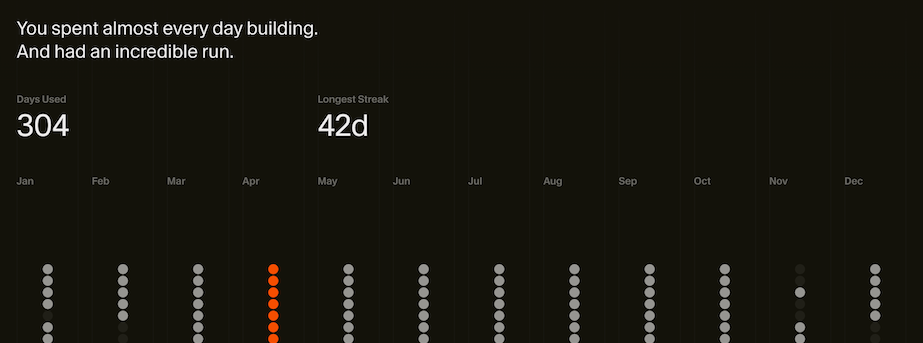
The year 2025 was the year of exploration and perspective forming for many of us. The rapid rise of GenAI in software development brought a familiar wave of bold claims, conflicting signals, and strong opinions. Depending on who you ask, it’s simultaneously reshaping how software is built, eliminating the need for engineers, or quietly overhyped.
For me, this last year was about continuing to stay in the trenches of code, staying curious, and exploring where the future is going.
One thing remained constant throughout this process: anything new in technology has to stay connected to what came before. Without that bridge, there’s no real path to adoption.
How I developed in 2025
In the past, I wrote about Prioritizing time to develop as a leader. Writing code daily continues to be an important priority for me.
This year, I kept up that momentum - spending 304 days writing code.
1. Don’t get stuck in analysis — keep the habit of “doing”

As I shared last year, finding time to code can be difficult on top of the “day job.” For me, that means the 4am–6am window is where the magic happens.
Each morning meant showing up to code and letting GenAI show up naturally alongside it. GenAI feels very different when you’re actively using it as part of a daily workflow. Strengths and weaknesses show up quickly. Edges become visible. Limits become clear.
The tools evolve fast. The only reliable way I’ve found to keep perspective is to consistently show up and stay close to the work.
2. Find the right tool for your workflow
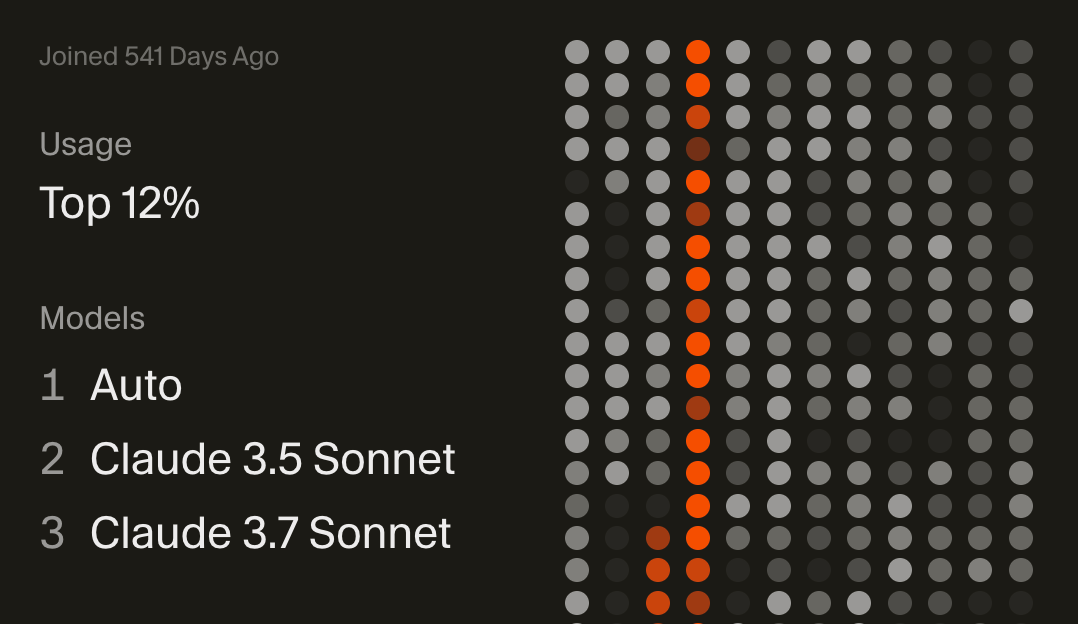
I explored many tools this year, but Cursor became my daily driver, placing me in the top 12% of Cursor users by usage.
I experimented with different models and configurations, but it always came back to the same core principles: muscle memory matters. Flow matters. Standards matter. And how new code integrates with legacy codebases matters more than most demos acknowledge.
The tools that worked best for me were the ones that adapted to that reality:
- Sometimes GenAI sits quietly in the background, offering small suggestions.
- Sometimes it becomes a more active collaborator.
- Sometimes I want to hand off a chunk of work and evaluate the result.
Being able to shift between those modes without breaking flow turned out to be more important than any single capability.
The goal wasn’t automation — it was optionality.
3. Use GenAI to explore ideas faster
One of the most meaningful changes for me this year was how I explored new ideas.
Instead of treating every project as something that needed to become “real,” I leaned into exploration. My machine is full of small, disposable projects focused on learning:
- testing new languages and technologies
- challenging my assumptions about architectural patterns
- running spikes on unfamiliar tools or approaches
This made it easier to throw work away without regret. GenAI reduced the cost of curiosity.
Not because it produces perfect answers, but because it lowers the friction of experimentation. I can move from question to constraint faster, which changes how quickly I build intuition.
In many cases, the value wasn’t the code — it was the learning along the way.
My takeaway: Coding like a surgeon, don’t manage the process
Where I’ve landed is simple: GenAI isn’t turning engineers into managers. It’s raising the bar for engineers who stay close to the work.
The idea of coding like a surgeon goes back to The Mythical Man-Month. One person remains deeply hands-on, supported by tools and systems that remove friction — but never responsibility.

A surgeon is not a manager. They see the full picture of what needs to be done. They are hands-on with the most critical work, while being supported by a team that helps with preparation, rote tasks, tooling, cleanup, and administration.
And GenAI as a part of the surgical team fits naturally into that model.
- It can assist.
- It can accelerate.
- But it doesn’t replace judgment, ownership, or accountability.
Those still sit with the person holding the scalpel.
Parting thoughts
GenAI can produce a lot of code, but it can’t carry or own responsibility. The focus on intent, architecture fundamentals, and judgement become critically important. GenAI can be part of the team, but it doesn’t remove accountability. That still falls on the “surgeon.” The hype is easy to get distracted by — accountability is not.
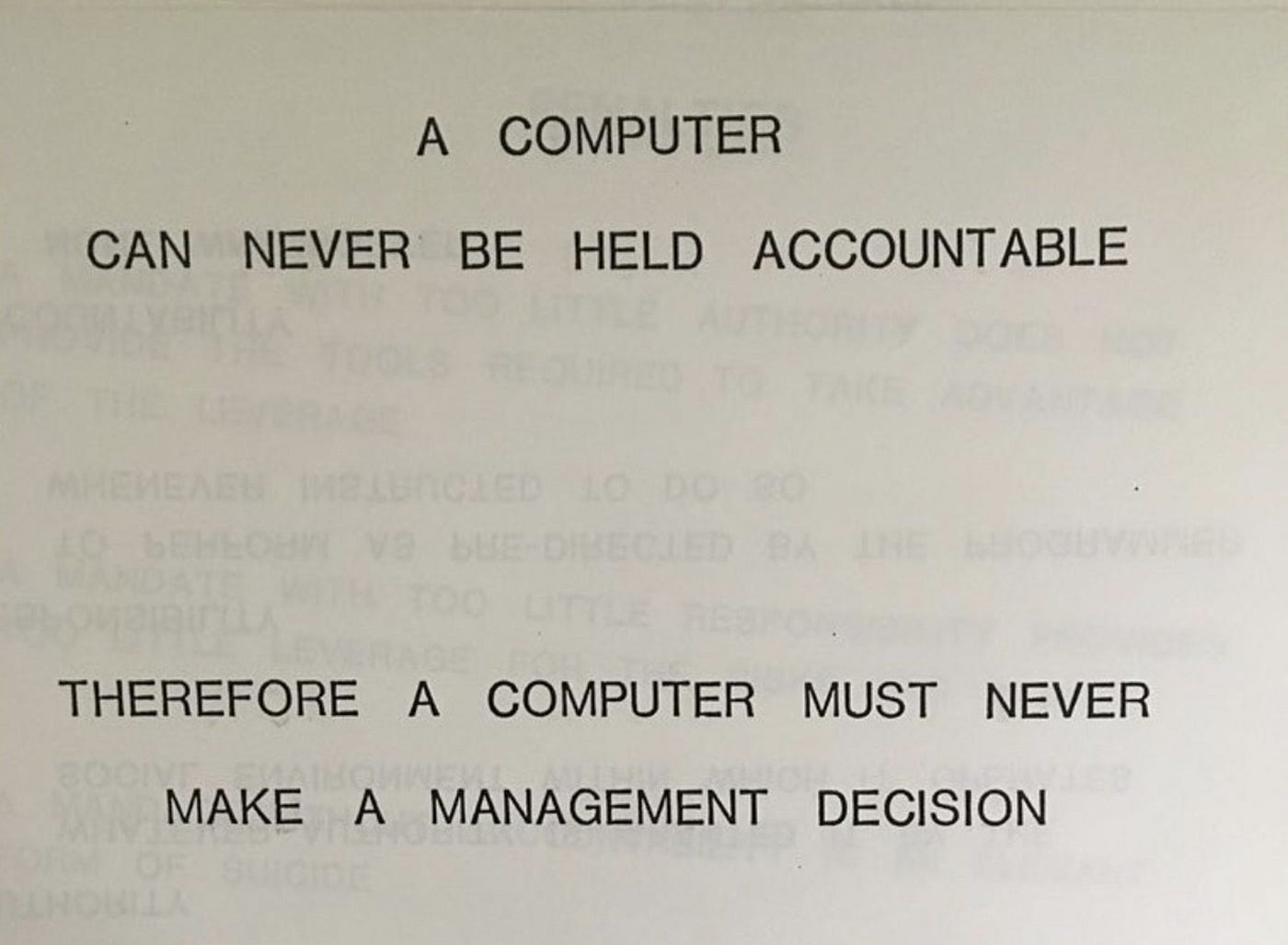
This is a screenshot from an internal IBM training in 1979, reinforcing that many foundational ideas still apply in this new world.
Years ago, I wrote about my fear of losing the engineering “edge.” In 2025, that fear feels categorically different.
GenAI brought back time to explore, to be curious, and to enjoy parts of the craft that often get crowded out by delivery pressure.
I’m excited to see what unfolds next.